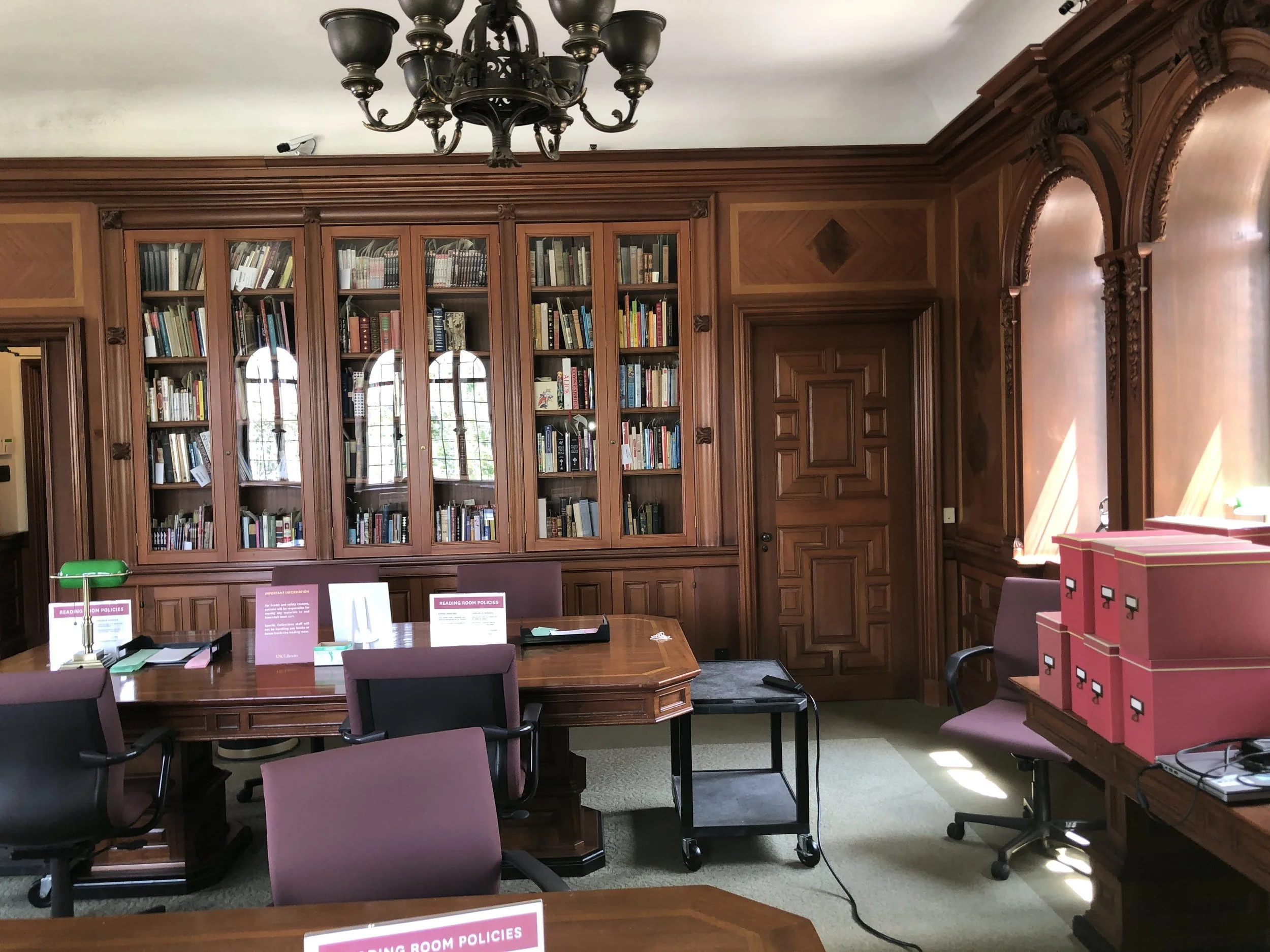
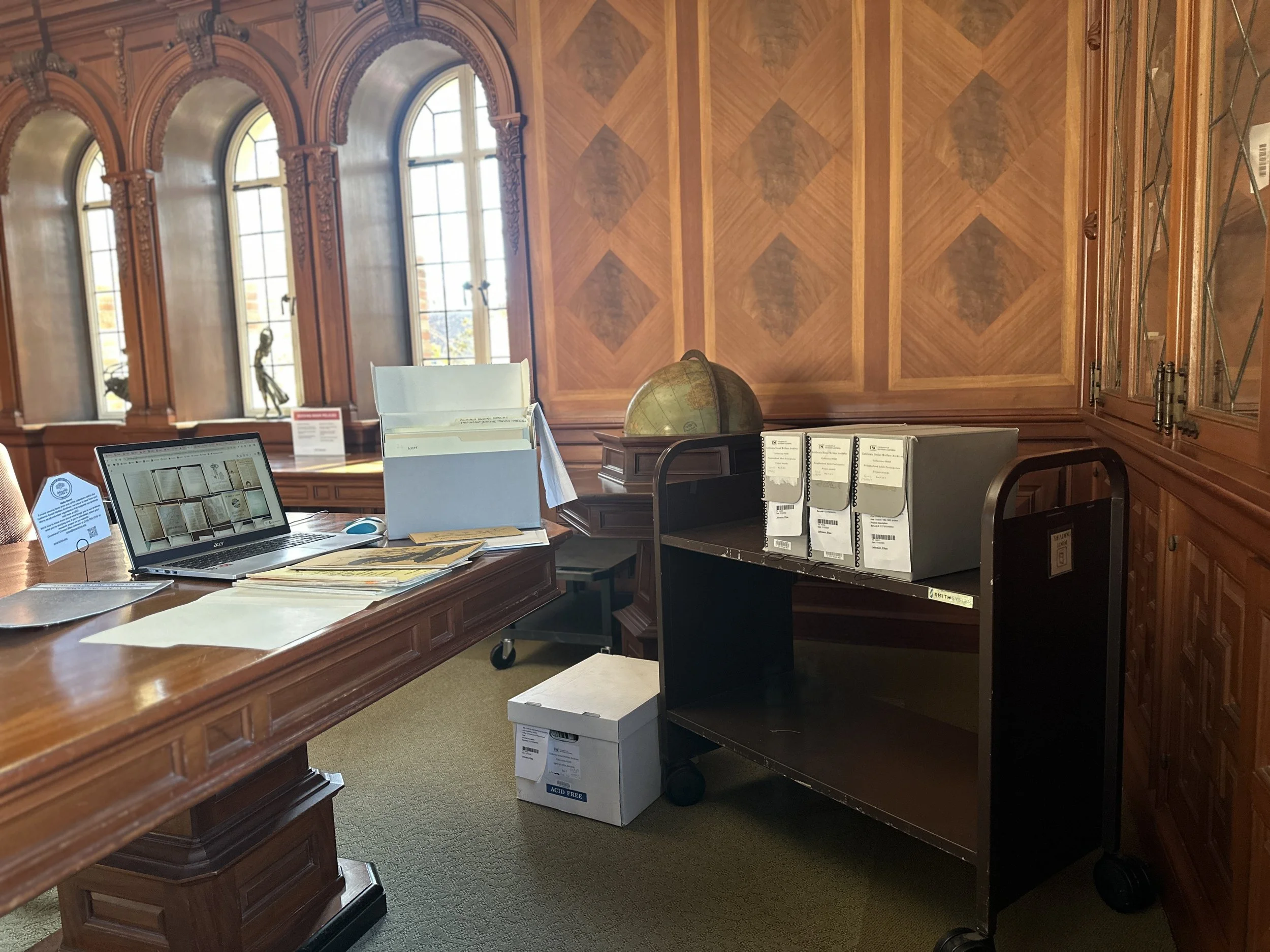
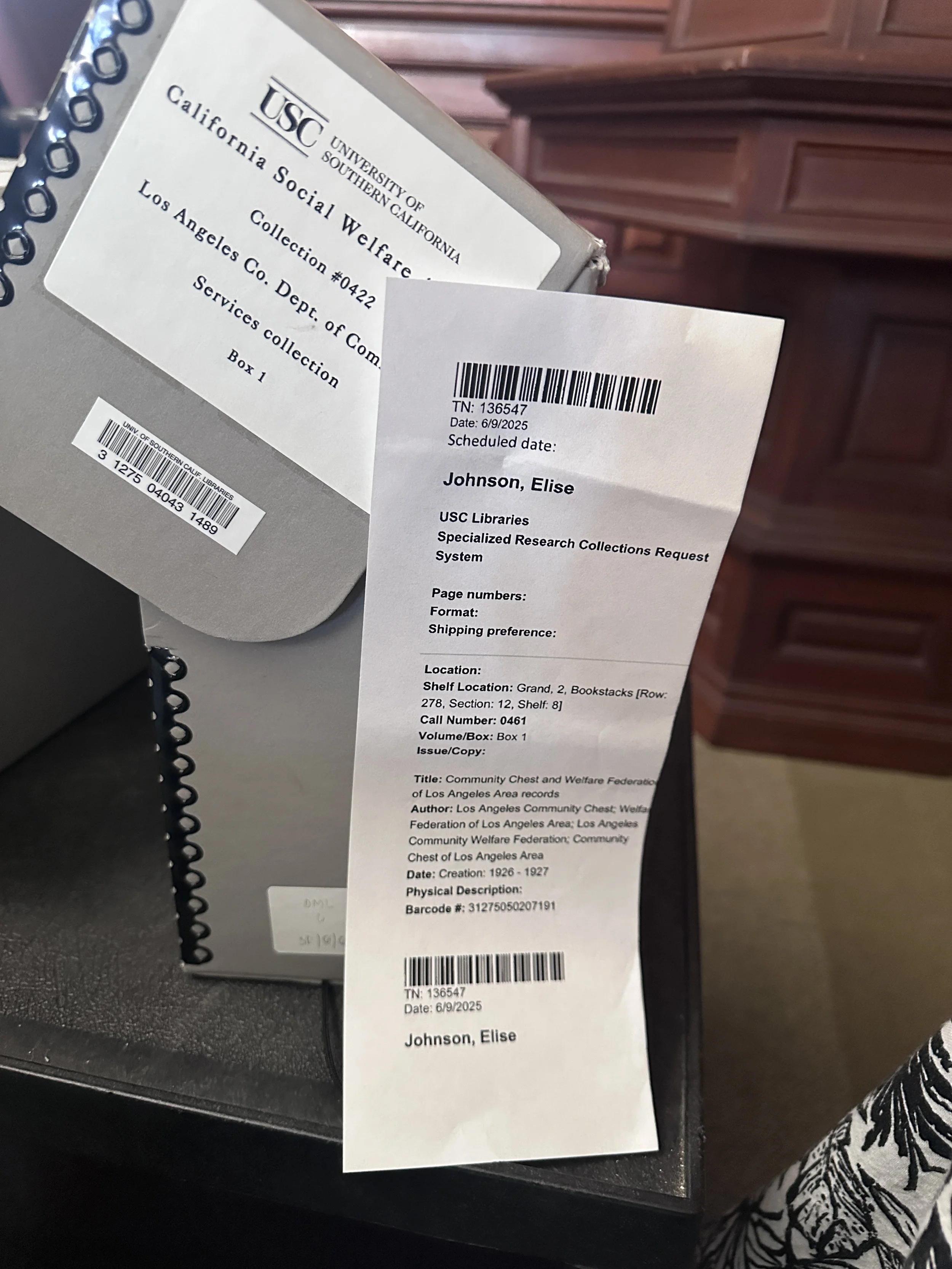
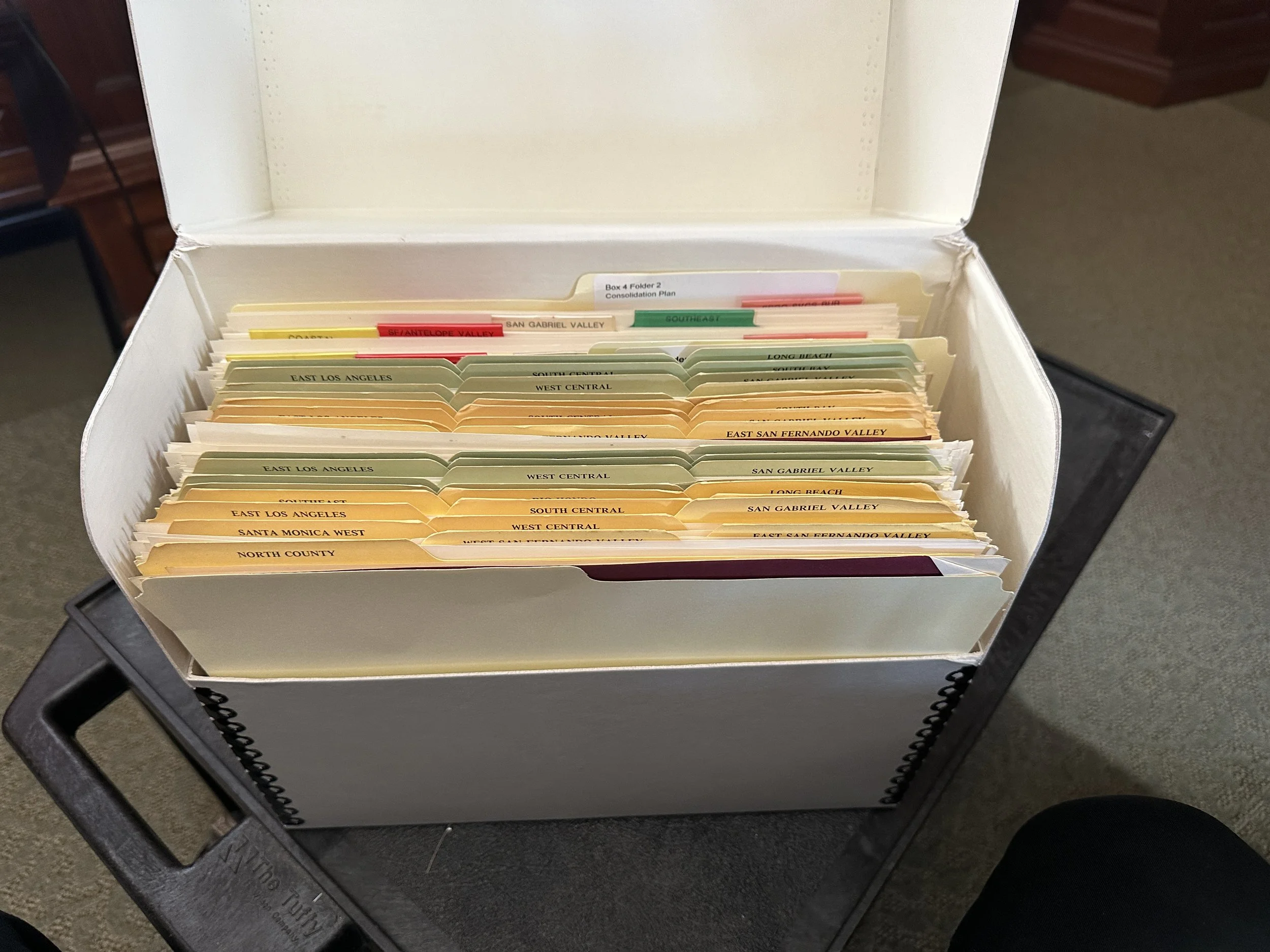
Our archival collection is open to the public*.
*Appointments are required. Interested in visiting? We’d love to have you! For more information, instructions and directions about this process, please email Elise Johnson eljohnson@csudh.edu
CSWA celebrates the historians, the students, the social workers and the hundreds of others who have utilized our archival collections to study social welfare.
We’d like to introduce you to some of them.
CSWA’s archival documents were primary sources for this upcoming webinar on 2/24/26 at 2pm. Join us!
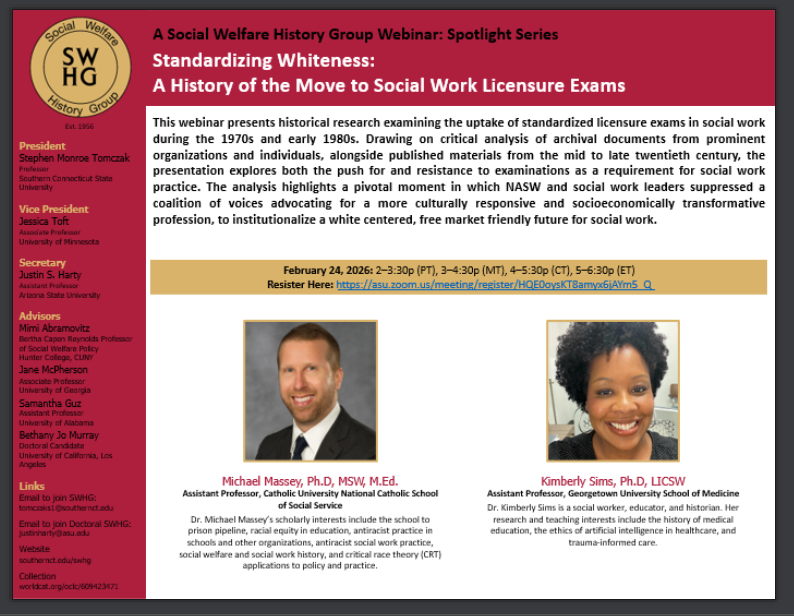
The Social Welfare History Group is pleased to announce an important webinar entitled “ Standardizing Whiteness: A History of the Move to Social Work Licensure Exams” presented by Dr. Michael Massey of Catholic University and Dr. Kimberly Sims of Georgetown University on February 24, 2026: 2–3:30p (PT), 3–4:30p (MT), 4–5:30p (CT), 5–6:30p (ET).
This webinar presents historical research examining the uptake of standardized licensure exams in social work during the 1970s and early 1980s. Drawing on critical analysis of archival documents from prominent organizations and individuals, alongside published materials from the mid to late twentieth century, the presentation explores both the push for and resistance to examinations as a requirement for social work practice. The analysis highlights a pivotal moment in which NASW and social work leaders suppressed a coalition of voices advocating for a more culturally responsive and socioeconomically transformative profession, to institutionalize a white centered, free market friendly future for social work.
https://asu.zoom.us/meeting/register/HQE0oysKT8amyx6jAYm5_Q
We look forward to seeing you at the webinar on February 24th!
Veronica Ly, M.A,
December 2025
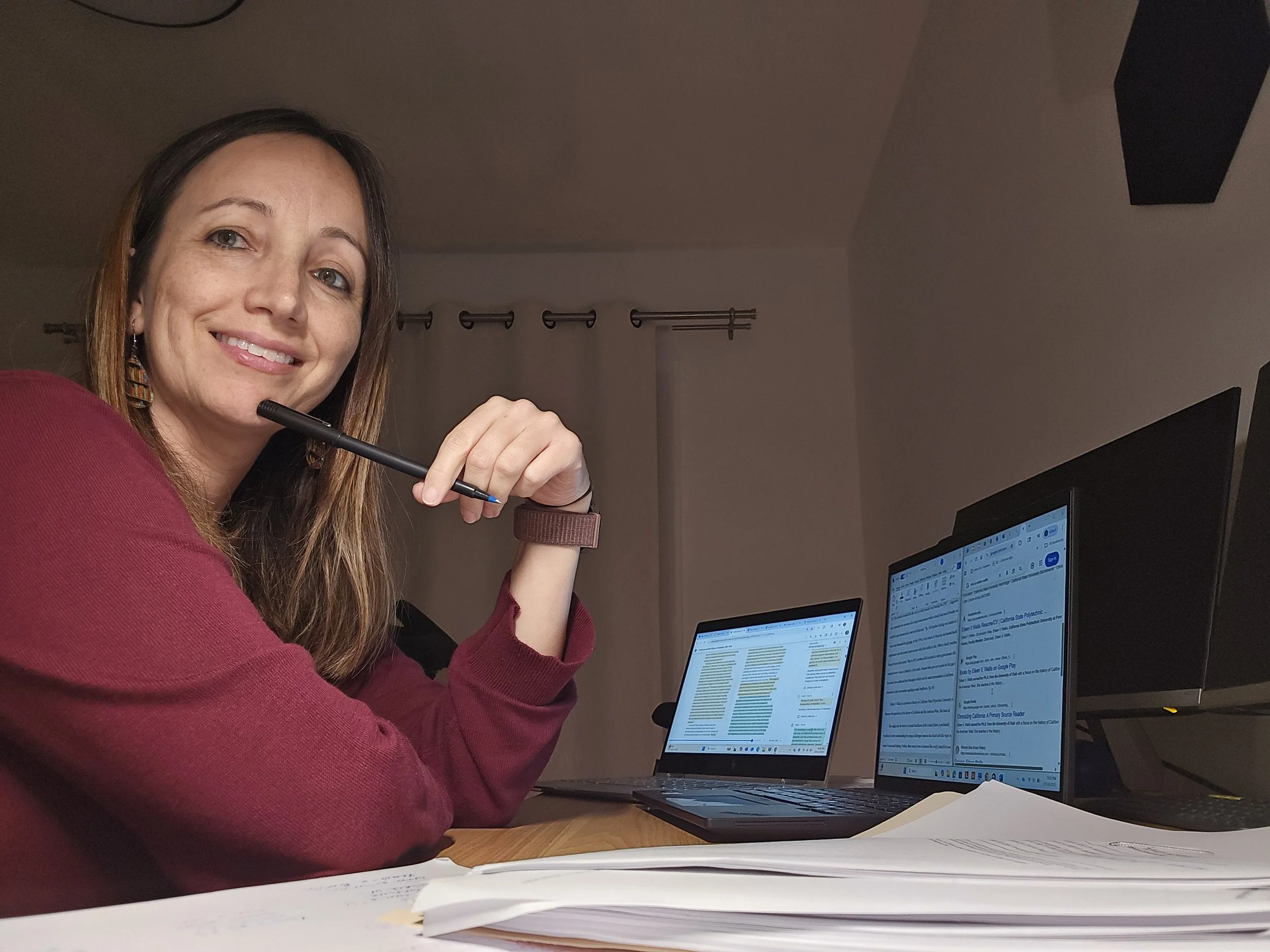
I am a teacher in Los Angeles and have been teaching for fourteen years. In December 2025, I completed my Master of Arts in American history. For my Capstone, I decided to focus on a topic that I had always been curious about but did not know a lot about: the history of mental healthcare in California.
The research for this topic led me to the California Social Welfare Archives. I was connected with Executive Committee member, lecturer, and Clinical Social Worker Elise Johnson who provided me with much needed context on the topic. From the context she provided, I found the details about the Rancho Los Amigos Hospital and its history in terms of mental healthcare in California to be especially fascinating and telling. From the archives, I explored the Rancho Los Amigos Hospital records (1915-1930) when the facility was called the Los Angeles County Poor Farm. Specifically, I looked at the California Social Welfare Archives Collection #0407, Box 27 and the collection helped solidify, deepen, and validate my other research in terms of helping to illustrate the various iterations that not only the state of California but also the U.S. has experienced in how it has treated the mentally ill.
For more information about Ms. Ly’s research, including her capstone entitled, Countering California’s Cycles of Dysfunction and Reform: How Rockhaven Sanitarium Effectively Cared for the Mentally Ill, contact: veronicaly7@gmail.com
Doris Cruz-Mestizo

September 2025
I am a senior at the University of Notre Dame Majoring in Honors History and Latino Studies, with a minor in International Security Studies. I am currently writing a senior thesis, focusing on Latino labor migration from California to Minnesota. Within my research I was using the California Social Welfare Archives Collection #0449 California Migrant, Transient and Homeless Population collection to build a basis and multiple viewpoints of Migrants in California. I was able to read first hand accounts and newspapers that pertained to the migrant experience and hardships that presented themselves while migrating. I was also able to identify a possible future chapter to my thesis, which is the transient youth to labor migration that participated within undocumented forms of labor and brought forward a population I had overlooked within my previous research. . The California Social Welfare Archives provided both present day and historical accounts of mobilization that will supplement my ideas and writing within my senior thesis.
POV: You’re researching archival materials in our archives.